Showing posts with label blood. Show all posts

Monday, July 23, 2012

Sepsis


Sepsis is a serious medical condition caused by an overwhelming immune response to infection. Immune chemicals released into the blood to combat the infection trigger widespread inflammation, which leads to blood clots and leaky vessels. This results in impaired blood flow, which damages the body’s organs by depriving them of nutrients and oxygen. In severe cases, one or more organs fail. In the worst cases, blood pressure drops, the heart weakens and the patient spirals toward septic shock. Once this happens, multiple organs—lungs, kidneys, liver—may quickly fail and the patient can die. Sepsis is a major challenge in the intensive care unit, where it’s one of the leading causes of death. It arises unpredictably and can progress rapidly. Sepsis can be defined as the body's response to an infection. An infection is caused by micro-organisms or "germs" (usually bacteria, fungi and viruses,but bacteria are the most common culprits) invading the body, and can be limited to a particular body region (e.g., a tooth abscess) or can be widespread in the bloodstream (often called "septicemia" or "blood poisoning"). It stems from another medical condition such as an infection in the lungs, urinary tract, skin, abdomen (such as appendicitis) or other part of the body. Invasive medical procedures like the insertion of a vascular catheter can introduce bacteria into the bloodstream and bring on the condition
Although everybody is at potential risk of developing sepsis from minor infections (e.g., flu, urinary tract infections, gastroenteritis, etc.), sepsis is most likely to develop in people who:
  • Are very young (e.g. premature babies) or very old
  • Have a weakened ("compromised") immune system, often because of treatments such as chemotherapy for cancer, steroids (e.g. cortisone) for inflammatory conditions, etc.
  • Have wounds or injuries, such as those from burns, a car crash, or a bullet
  • Have certain addictive habits, such as alcohol or drugs
  • Are receiving certain treatments or examinations (e.g., intravenous catheters [a small tube for dripping fluids into the vein], wound drainage, urinary catheters [a small tube inserted into the bladder]
  • Are more prone to develop sepsis than others because of genetic factors (or their "genes")
Patients who are admitted to the hospital with serious diseases are at the highest risk of developing sepsis because of: 
  • Their underlying disease 
  • Their previous use of antibiotics 
  • The presence of drug-resistant bacteria in the hospital
  •  The fact that they often require an intravenous tube, urinary catheter, or wound drainage
The infection leading to sepsis can be acquired outside the hospital (known as community acquired) or in the hospital (known as nosocomial). Hospital-acquired infections are generally more difficult to manage than those acquired in the community, because:

  • The infecting microorganism is more dangerous to the patient
  • The patient is often already sick
  • The microorganism may be resistant to common treatments due to the widespread use of antibiotics in hospitals
THE OCCURRENCE OF SEPSIS
Every year, severe sepsis strikes about 750,000 Americans. It’s been estimated that between 28 and 50 percent of these people die—far more than the number of U.S. deaths from prostate cancer, breast cancer and AIDS combined. The number of sepsis cases per year has been on the rise in the United States. This may be due to an aging population, the increased longevity of people with chronic diseases, the spread of antibiotic-resistant organisms, an upsurge in invasive procedures and broader use of immunosuppressive and chemotherapeutic agents.
Sepsis occurs in three different forms or stages, called:
# Uncomplicated sepsis
# Severe sepsis
# Septic shock
The disease progresses in some people through all three stages. Despite optimal (best or most favourable) care, some patients may not respond to treatment, and may develop multiple organ disease and eventually die.
  1. UNCOMPLICATED SEPSIS:

Uncomplicated sepsis, such as that caused by flu and other viral infections, gastroenteritis, or dental abscesses, is very common and is experienced by millions of people each year. The majority of these people will not need hospital treatment.
    2.SEVERE SEPSIS:
Severe sepsis arises when sepsis occurs in combination with problems in one or more of the vital organs, such as the heart, kidneys, lungs, or liver. Because of problems with their vital organs, people with severe sepsis are likely to be very ill and are more likely to die (in 30-35 % of cases) than those with uncomplicated sepsis.
   3.SEPTIC SHOCK
Septic shock occurs when sepsis is complicated by low blood pressure that does not respond to standard treatment (fluid administration) and leads to problems in one or more of the vital organs as described above. The condition means that the body does not receive enough oxygen to properly function and drugs called vasopressors are used to raise the blood pressure. Septic shock patients are very ill and need rapid emergency admission to the hospital intensive care unit (ICU). Despite active treatment in the ICU, the death rate is around 50%.
What are the symptoms of sepsis?
Common symptoms of sepsis are fever, chills, rapid breathing and heart rate, rash, confusion and disorientation. Many of these symptoms, such as fever and difficulty breathing, mimic other conditions, making sepsis hard to diagnose in its early stages. 
HOW IS SEPSIS TREATED?
The treatment of severe sepsis and septic shock may include:
  • Antibiotics to treat the infection
  • Surgery to control the source of the infection
  • Fluids through the intravenous or IV catheter (drip) - these fluids may sometimes include nutritional liquids if the patient cannot eat normally
  • Drugs to raise the blood pressure or improve the function of the heart
  • Organ support, such as artificial ventilation for the lungs (breathing machine), kidney support (kidney machine), etc

Despite the best possible care, some patients may not respond to treatment, and but rather develop further organ failure and die. Research into better treatment methods continues. Recent studies have shown that survival in some patients with severe sepsis can be improved with medications that alter blood clotting, reduce inflammation, or support the stress response, and by new approaches to support organ function. These treatments are not appropriate in all patients. These therapies may include:
- Activated protein C
- Steroids
- Using modest breath sizes
- Maintaining blood sugar



Tuesday, July 3, 2012

The Heart

People have been using heart as a symbol for presenting love, mercy, emotion and passion since centuries. It represents our emotion and health. We have been taught to draw ♥ when we want to tell someone we love you since childhood. The majority of children draw themselves with their parents around it with smiles in their faces under sun shine in the middle of a garden. However, some other people complain because their heart has been recently broken due to a break up or because there is a medical problem.


Heart and its blood vessels, by Leonardo da Vinci, 15th century


In fact, the real heart is not simple as we thought. It is very complex to serve our life. It pumps blood to our body all the time without a break. Can you do it? Can you work 24/7 without taking rest? It can.
This organ consists of 4 chambers; 2 of them for receiving blood and the other 2 are for pumping blood. When we draw a heart, we should consider that we draw someone's heart who is looking at us; that means both right Atrium and Ventricle are on the left and both left Atrium and Ventricle are on the right side.

Lets see how we can draw a heart so easily by this awesome video:


  The real heart looks like this:          


Blood circulation:
There are 2 types of blood circulation
1. Major circulation (systemic circulation): the blood is pumped from the heart to the body through Aorta and vice versa through both superior and inferior Vena Cava.
2. Minor circulation (Pulmonary circulation): the blood is pumped from the heart to the lungs through Pulmonary arteries and vice versa through Pulmonary veins.

                                                                          Ref: http://en.wikipedia.org/wiki/Heart
Some important definitions:
1.Cardiac cycle: Sequence of events in 1 heartbeat. Blood is pumped through the entire cardiovascular system.
2.Systol: Contraction phase, usually refers to ventricular contraction.
3.Diastol: Relaxation phase, the atria and ventricles are filling. Lasts longer than systole.
4.Stroke volume (SV): Amount of blood ejected from either ventricle in a single contraction.
5.Starling’s Law of the Heart states that degree of cardiac muscle stretch can increase force of ejected blood. More blood filling the ventricles ↑ SV.
6.Cardiac output (CO): Amount of blood pumped through the cardiovascular system per min.
CO = SV X Heart rate (HR)
7.Depolarization: The electrical charge of a cell is altered by a shift of electrolytes on either side of the cell membrane. This change stimulates muscle fiber to contract.
8.Repolarization: Chemical pumps re-establish an internal negative charge as the cells return to their resting state.

The conduction system of the heart:

Several types of cardiac muscle fibers exist within the heart. It is often useful to classify these types broadly as either contractile or conductile
CONTRACTILE cells are the cells of the working myocardium and constitute the bulk of the muscle cells that make up the atria and the ventricles. An action potential in any one of these cells leads to vigorous force development and/or mechanical shortening. 
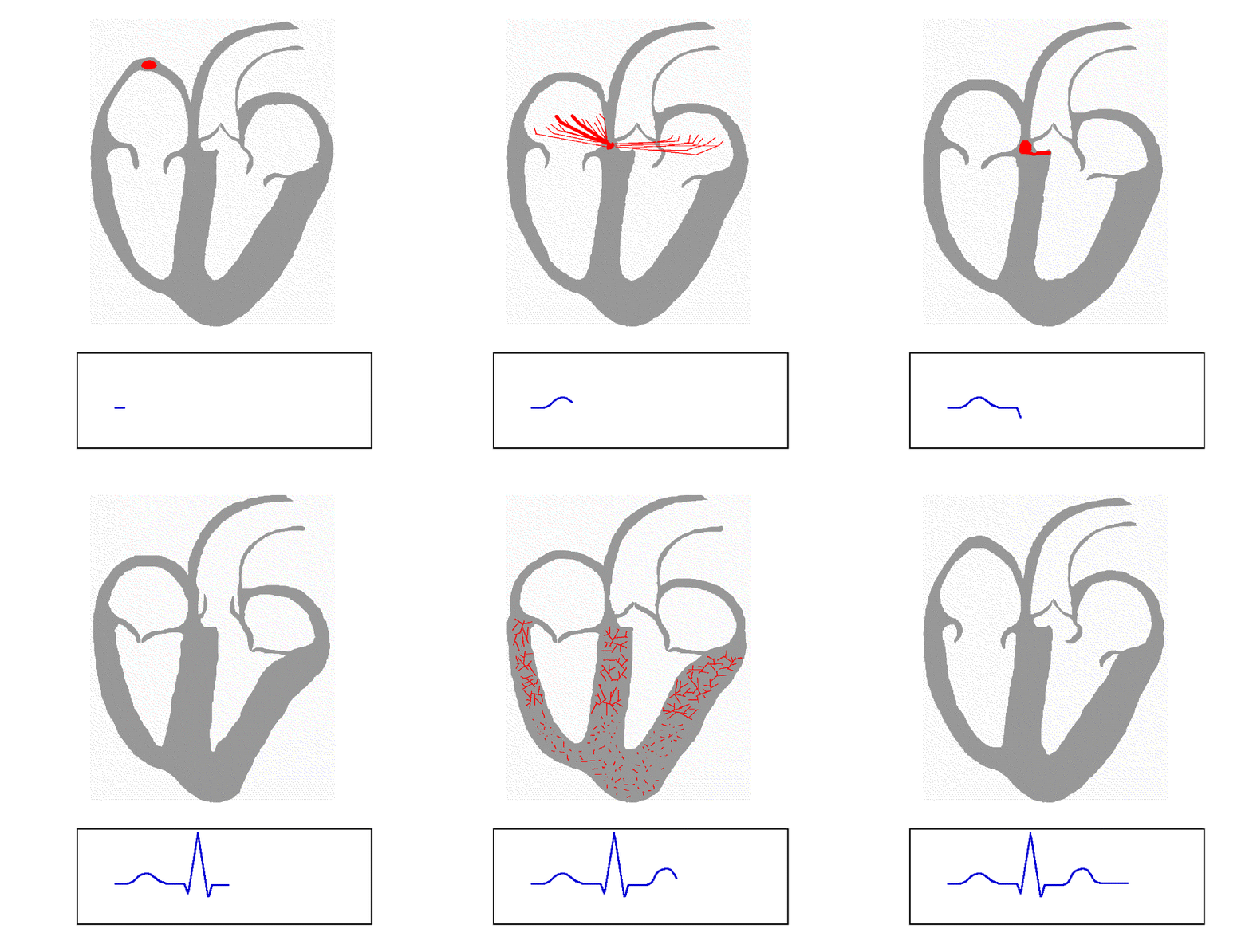
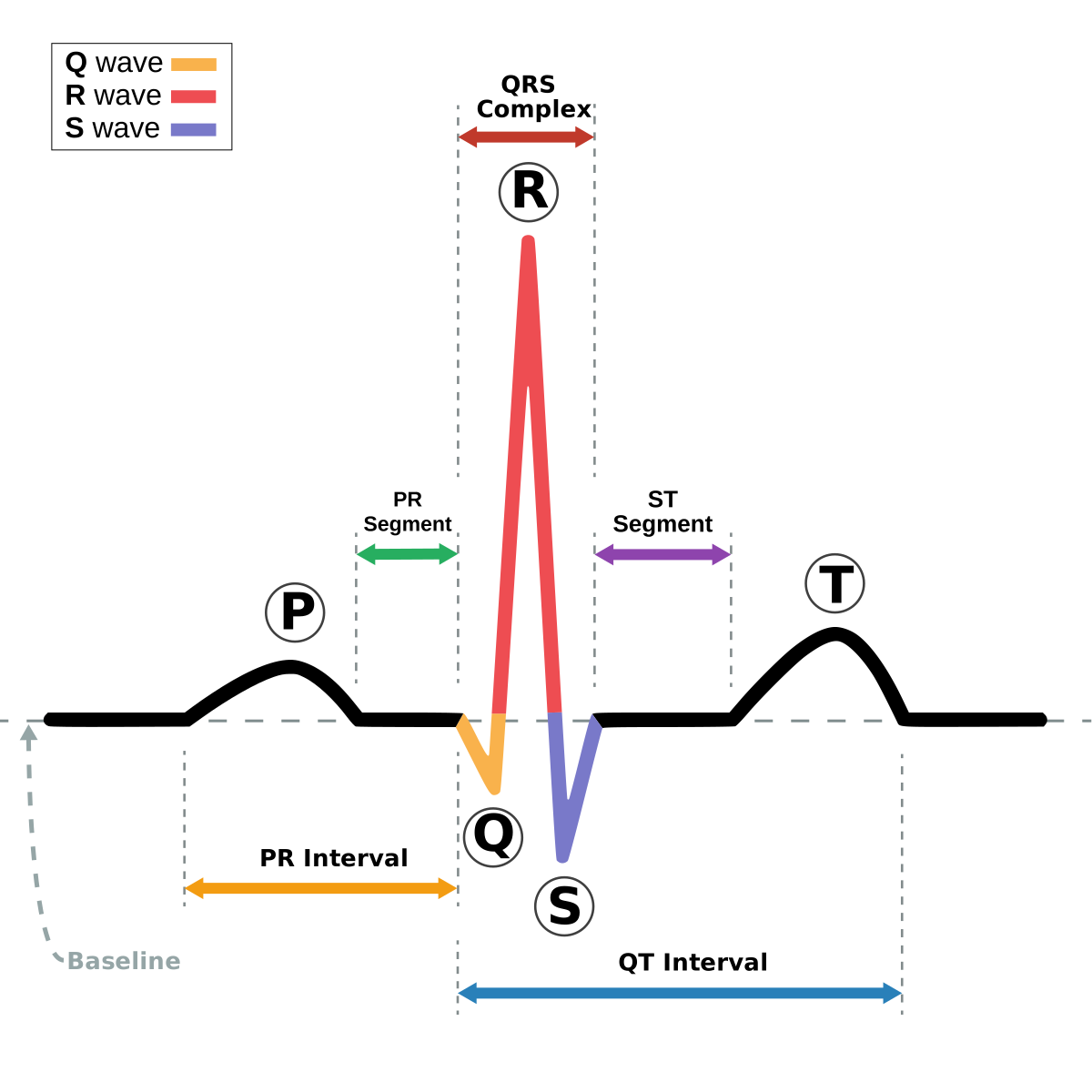
CONDUCTILE cells are specialized muscle cells that are involved with the initiation or propagation of action potentials rather than direct generation of force. In addition to the effects of the CNS on the heart, the heart can work on its own. The conducting system of the heart consists of cardiac muscle cells and conducting fibers (not nervous tissue) that are specialized for initiating impulses and conducting them rapidly through the heart. They initiate the normal cardiac cycle and coordinate the contractions of cardiac chambers. Both atria contract together, as do the ventricles, but atrial contraction occurs first. The conducting system provides the heart its automatic rhythmic beat. For the heart to pump efficiently and the systemic and pulmonary circulations to operate in synchrony, the events in the cardiac cycle must be coordinated.


This conduction can be summarized as the following:
From Sinoatrial node (60-100 times/minute, bpm) to Atrioventricular node (40-60 times/minute) to bundle of His to left and right bundles to Purkinje fibers (20-40 times/minute).

Types of pacemakers:
SA node is the natural (main) pacemaker of the heart.
AV node, bundle of His and Purkinje fibers are the latent pacemakers.

Cardiac action potential:


Cardiac Pacemaker action potential:


1.At membrane potential -60 mV, Na/K channels (funny channels) open to influx Na and efflux K [GRADUAL DEPOLARIZATION].
2.When membrane action potential reaches the threshold at -40 to -45 mV, T Ca channels open (T stands for Transit = FAST)  
3. L Ca channels open (L stands for Long = SLOW) for Ca influx till the action potential reaches 0 mV [SPIKE or FAST DEPOLARIZATION]. 
4.At this point, K channels open to facilitate K efflux. 
5.That makes the cytosol increasingly negative and creates the following phase of action potential [REPOLARIZATION]. 
6.When repolarization is complete, K channels close and pacemaker action potential starts over. 

Each depolarization of SA node sets off ONE heart beat
POLARIZED state ----DEPOLARIZATION --- REPOLARIZATION --- POLARIZED state

The effect of Autonomic nervous system on heart pacemaker


All what the Autonomic nervous system does is REGULATING the heart rate whether increases or decreases the heart rate. That means increasing or decreasing number of action potentials per particular time; the slope of gradual depolarization. 
Paraympathetic nervous system DECREASES heart rate through neurotransmitter Ach (Acetycholine).
Sympathetic nervous system INCREASES heart rate through neurotransmitter NE/E (NorEpinephrine/Epinephrine)


Myocardial action potential:


Myocardial action potential occurs in atrial and ventricular myocytes, and it proceeds like the following:
1.Phase 0: RAPID DEPOLARIZATION (Na influx)
2.Phase 1: Early RAPID REPOLARIZATION (K efflux)
3.Phase 2: Plateau (Ca influx)
4.Phase 3:Final RAPID REPOLARIZATION (K efflux)
5.Phase 4: SLOW DEPOLARIZATION (K influx, Na and Ca efflux) through Na/K ATPase pump (3 Na/ 2 K)which pumps Na out of the cell and pumps K inside the cell and generating energy, Ca ATPase pump which pumps  Ca out of the cell and regain concentration gradient and Na/Ca exchanger [NCX] (3 Na/1 Ca) which exchanges Na influx with Ca efflux. The previous pumps are called Electrogenic pumps.

  • From phase 1 to starting phase 3 is absolute REFRACTORY period (effective refractory period); the cell can not respond to any stimuli. 
  • During phase 3 is RELATIVE refractory period; the cell respond to strong stimuli.